
Kolkata | Around 63.66 lakh names, nearly 8.3 per cent of the electorate, have been deleted in West Bengal since the Special Intensive Revision (SIR) began in November last year, bringing down the total number of voters in the state to over 7.04 crore ahead of the assembly elections due in April, EC officials said.
The post-SIR rolls, released on Saturday after a 116-day exercise, also show that over 60 lakh electors have been placed in the "under adjudication" category, with their fate to be decided by judicial officers in the coming weeks, a process that could further recalibrate constituency-level equations.
The draft rolls, published on December 16, had already pared down the electorate from 7.66 crore to 7.08 crore, deleting over 58 lakh names on grounds of death, migration, duplication and untraceability. Following hearings, scrutiny and disposal of claims and objections, another 5,46,053 deletions were recorded through Form-7 applications, taking the total SIR-linked omissions to around 63.66 lakh.
More than 1.82 lakh electors were added through Form-6 and Form-6A submissions, partially offsetting the deletions. Officials said the figures could still witness marginal changes as fresh inclusions and objections continue to be processed.
Earlier in the day, a senior official of the Chief Electoral Officer's office told PTI that the EC was likely to delete nearly eight lakh names over and above the 58 lakh removed in the draft rolls, taking the total SIR-linked deletions in the state to around 66 lakh.
He had also said that the figures following the post-SIR publication may not be definitive, as further inclusions through Form-6 applications and fresh deletions based on Form-7 objections could alter the overall numbers.
Significantly, around 60.06 lakh voters have been placed in the "under adjudication" category, largely due to what officials described as "logical discrepancies" in their enumeration forms. These names have been retained in the rolls pending adjudication.
Over 58 lakh enumeration forms were not received during the exercise, including cases involving deceased, shifted and duplicate electors, officials said. Of the 7.08 crore names that appeared in the draft rolls, around 6.4 crore have been marked as "approved" so far.
The Election Commission maintained that the SIR -- the first intensive statewide revision since 2002 -- was a statutory clean-up exercise aimed at ensuring a "pure and error-free" roll ahead of a major election.
Beyond aggregate figures, district and constituency-level data underline the scale of the shake-up.
In Bhabanipur constituency, represented by Chief Minister Mamata Banerjee, 47,094 names have been struck off -- 44,786 at the draft stage and another 2,324 in the final publication -- while over 14,000 electors have been kept under adjudication.
The total deletions in the constituency are roughly 11,000 fewer than Banerjee's victory margin of over 58,000 votes in the 2021 bypoll.
Nadia district, bordering Bangladesh and often central to debates over migration and citizenship, witnessed around 2.73 lakh deletions. The electorate declined from 44.18 lakh at the start of the SIR to 41.45 lakh in the final rolls.
Bankura saw a net reduction of about 1.18 lakh names. From 30,33,830 voters in November, the draft rolls showed 29,01,009. After further scrutiny, the final figure stands at around 29.15 lakh.
North Kolkata, comprising seven assembly constituencies currently held by the TMC, recorded around 4.07 lakh deletions during the SIR, including 3.9 lakh at the draft stage and another 17,000 in the final list.
Alipurduar registered 1,02,835 deletions, with 11,96,651 names featuring in the final rolls.
In Hooghly, the electorate dipped from 47,75,099 at the beginning of the process to 44,40,293 now, reflecting a total deletion of 3,34,806 names, while 1,73,064 voters remain under adjudication. The draft rolls had pegged the district's electorate at 44,56,224.
The scale of deletions and the unusually large pool of voters under adjudication have turned the SIR into a political flashpoint in a state headed for another polarised contest.
The TMC alleged that "harassment in the name of SIR" had reached extreme levels and warned of political and legal agitation if valid voters were struck off.
The party accused the BJP of attempting to secure electoral gains through deletions, a charge the saffron camp rejected.
The BJP maintained that parties must contest elections on the basis of the finalised rolls, and political outfits should not question a statutory revision exercise.
Yet, beyond rhetoric lies the arithmetic of Bengal's tightly fought contests. In the 2021 assembly elections, several seats were decided by margins of a few thousand votes.
In border districts such as Nadia and North 24 Parganas, and in tribal and urban belts, demographic shifts and migration patterns have historically influenced booth-level outcomes.
A swing of even 2,000-3,000 voters in a closely fought constituency can alter the result.
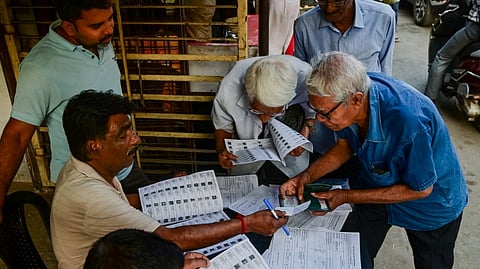
Political parties have intensified booth-level scrutiny, with cadres poring over printed rolls, cross-checking names and preparing appeals.
For the TMC, which swept north Kolkata in the last assembly election, the 4 lakh-plus deletions in the zone are being assessed against urban turnout patterns and organisational depth.
For the BJP, which has made gains in border and tribal belts in recent years, the adjudication of over 60 lakh pending cases could reshape equations in several districts.

