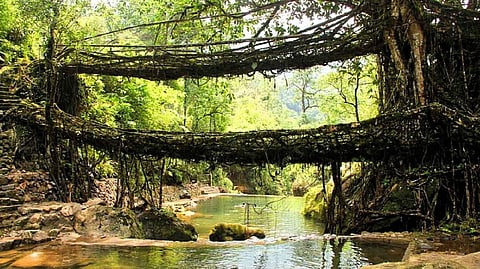

New Delhi | India has nominated 'Jingkieng Jri/ Lyu Charai Cultural Landscape', the Living Root Bridges of Meghalaya that signify harmony between humans and nature, for inscription into the UNESCO World Heritage List for the 2026-27 cycle, the government informed Parliament on Monday.
In a written response to a query in the Lok Sabha, Union Culture Minister Gajendra Singh Shekhawat also said the country has sent a proposal to the World Heritage Centre, seeking a UNESCO tag for the 'Ancient Buddhist Site, Sarnath' in Uttar Pradesh for the 2025-26 cycle.
The culture ministry was asked for details about the number of UNESCO World Heritage sites in the country and whether the government has sent any proposals for the inclusion of new sites in the World Heritage List.
"Yes, sir. The government has sent the following proposals to the World Heritage Centre for consideration for inclusion in the World Heritage List: Ancient Buddhist Site, Sarnath (2025-26), Jingkieng Jri/ Lyu Charai Cultural Landscape (2026-27)," he said.
Locally known as Jingkieng Jri, Living Root Bridges (LRB) are Ficus-based rural connectivity and livelihood solutions within the dense subtropical moist broadleaf forest eco-region of Meghalaya in the eastern extension of the Indian Peninsular Plateau, according to its description on UNESCO's website.
Grown by indigenous Khasi tribal communities, these structural ecosystems have performed in extreme climatic conditions for centuries and encapsulate a profound harmony between humans and nature, it said.
The underlying knowledge and skills have evolved through generations and continue to be practised today, affirming their exceptional value and relevance.
"Facilitating connectivity and disaster resilience in more than 75 remote villages in and near the wettest region on Earth, LRB validate outstanding ingenuity and resilience of an ancient culture, where collective cooperation and reciprocity were the fundamental building blocks of life," UNESCO's website says.
The minister in his response also shared the list of the 44 sites in the country which are on the UNESCO list -- 36 in the cultural category, seven in the natural category while one in the mixed category -- under the custody of various authorities.
Shekhawat was also asked for details of the special steps taken by the government for the conservation of heritage sites.
"The Archaeological Survey of India (ASI) undertakes conservation and maintenance of 3,686 monuments, including 27 World Heritage properties, along with the provision of amenities for tourists such as drinking water, toilet blocks, pathways and landscaping for protected monuments and sites under the ASI's jurisdiction," he said.
"Conservation and maintenance of these monuments and sites is a continuous process and is carried out based on the needs of the monuments and the availability of resources," he added.
UNESCO sites in India include the ruins of ancient Nalanda University in Nalanda district and Mahabodhi Temple Complex at Bodh Gaya in Bihar, Maratha Military Landscapes of India in Maharashtra (inscribed in 2025), Moidams-the Mount-Burial system of the Ahom Dynasty in Assam (inscribed in 2024), Rani ki Vav (The Queen's Stepwell) at Patan in Gujarat, Chhatrapati Shivaji Terminus (formerly Victoria Terminus) in Mumbai, Jantar Mantar in Jaipur and the Historic City of Ahmedabad in Gujarat.
Kaziranga National Park in Assam, Sunderbans National Park in West Bengal and Great Himalayan National Park in Himachal Pradesh are also on the coveted list.

