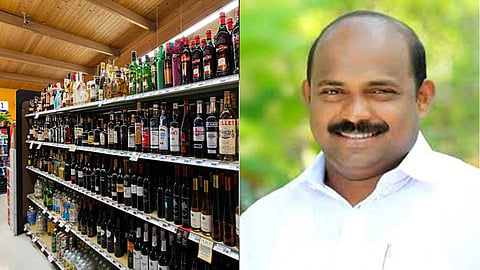

Alappuzha (Keralam) | Keralam Excise Minister M Liju on Sunday said a report has been sought from the Excise Commissioner after a firm began selling horti wine, an alcoholic beverage with low alcohol content, through bakeries in the state.
Horti wine is an alcoholic beverage produced through the fermentation of tropical fruits and agricultural products.
The previous LDF government amended the Foreign Liquor Rules in 2024, permitting licensed bakeries and shopping centres to sell horti wine.
A firm based in Chalakudy had approached the Excise Commissioner in June this year seeking permission to sell the beverage under the amended rules.
The commissioner granted permission after collecting the prescribed licence fee, officials said.
The firm recently began selling the product, bringing the matter to public attention.
Speaking to reporters, Liju said there might be no technical issue with the Excise Commissioner granting permission under the existing rules, but the matter should have been brought to the minister's attention.
"The decision should have been taken only after informing the minister and others," he said, adding that the government would examine the matter seriously.
The minister said the government had doubts about the social implications of making such products available through supermarkets and bakeries.
"Even if it was the previous government's policy, how beneficial is it to society for it to be available in a supermarket or a bakery," he asked.
Liju said a detailed report had been sought on all aspects of the matter and the government would examine the circumstances under which permission was granted.
Meanwhile, former Excise Minister and CPI(M) leader M B Rajesh said the licence for the sale of horti wine in Chalakudy was issued in June, after the UDF government came to power.
"It is true that the amendment to the rules was made during the LDF government's tenure. But the licence was not issued during the LDF government's time. The licence in Chalakudy was issued in June, after the government changed and the UDF came to power," he said.
Rajesh said the LDF government had approved the production of fruit wine to support farmers and the decision was taken following suggestions from agricultural organisations and experts in the sector.
He alleged that an attempt was being made to create confusion by equating fruit wine with other low-alcohol beverages.
"This is not liquor in the conventional sense. It is wine produced by fermenting agricultural products," he said.
Rajesh questioned the minister's claim that he was unaware of the licence, pointing out that it was issued in June, after the UDF government assumed office.
"If the minister was unaware of it, that is not our fault. The licence was issued in June under the existing rules," he said.
He also said the production and sale of fruit wine were not decisions taken overnight, but followed detailed discussions and consultations with stakeholders, including agricultural organisations.
Rajesh said the UDF government should clarify whether it was now reconsidering decisions related to licences for such products, adding that if the minister was unaware of the developments, it pointed to a lack of communication within the government.

