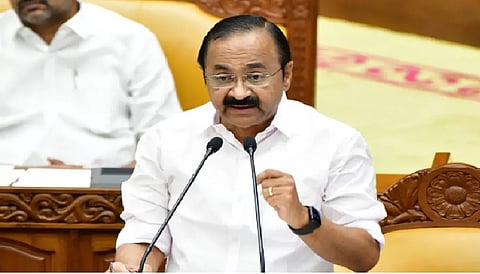


# Ajayan | The message is unmistakable. A quote from Pandit Jawaharlal Nehru may sound natural from one who professes to uphold Nehruvian socialism and reminds one of how Budget speeches leaned on poetry and sentiment. But this Budget marks something far more consequential: a decisive shift in direction. In his maiden Budget, Chief Minister and Finance Minister VD Satheesan declared that private enterprise is no longer merely an engine of growth - it is essential to Kerala’s very existence.
This Budget has been crafted from a near-empty treasury. Kerala is burdened by debt, while salaries, pensions and interest payments consume nearly 77% of its revenue. What remains is scarcely enough to sustain, let alone expand development projects and welfare programmes.
The privatisation thrust emerged right at the outset. After laying bare Kerala’s grim fiscal reality, the Finance Minister unveiled his development ‘magic’ - Mission Samudra. Buoyed by the success of the Vizhinjam International Transhipment Terminal, the Rs 400-crore initiative seeks to integrate Kerala’s coastline through a network of ports, waterways and rail links. The vision is expansive: a shipbuilding facility near Vizhinjam and the transformation of the port into India’s premier bunkering hub.
And this is no modest undertaking. Mission Samudra could demand investments running into thousands of crores. The government is exploring Blue Bonds and, significantly, embracing the now-mainstream PPP (public-private partnership) model. Gujarat’s success with port-led development offers an attractive template. Yet the comparison has its limits. Gujarat’s ports are powered by a vast manufacturing base and thriving export-import ecosystem. Kerala, with its relatively limited industrial and trading activity, lacks those advantages. The promise is substantial, but so are the risks, demanding a measure of caution alongside the optimism.
Another headline-grabbing announcement is the Rare Earth and Critical Minerals Corridor, for which the Budget has earmarked Rs 100 crore. The proposal echoes the Union Government’s strategic push in the recent Union Budget aimed at securing critical mineral supplies. Yet, in Kerala, rare earth mining remains a deeply contentious issue. Allegations and investigations linked to figures in the sector, including former Chief Minister Pinarayi Vijayan’s daughter unduly receiving money, have kept the controversy alive, while fisherfolk and environmental groups have long warned against the ecological and social costs of indiscriminate extraction. Against this backdrop, opening the sector to greater private participation is unlikely to pass without resistance. Without stringent safeguards, the pursuit of economic opportunity could come at a steep price for both vulnerable communities and the environment.
A Rs 100-crore MSME Growth Scheme, a Global Job Watch Tower, Kerala Mark certification for local products and the ambitious Kerala Knowledge Valley are among the standout features of Satheesan’s maiden Budget. Promising delivery over declarations, the Finance Minister said every initiative would be tracked through a dedicated monitoring mechanism.
Equally significant is his proposal to revise land fair values, which he has branded as “Land Reforms 2.0”. If implemented well, it could correct a long-standing disconnect between official valuations and market realities. But land prices are a moving target. What is needed is not a one-off revision, but an expert panel empowered to regularly assess demand and recalibrate valuations, ensuring the reform remains relevant rather than rhetorical.
The much-touted Kerala Infrastructure Investment Fund Board (KIIFB), long projected by the Left as a magic wand for development, is also set for reassessment by a special committee. Given its reliance on off-Budget borrowings and its substantial contribution to the State’s debt burden, such scrutiny is overdue. What was sold as an innovative financing model must now be subjected to a hard audit of its costs, liabilities and actual returns.
Despite Kerala’s precarious finances, the public has been spared fresh taxes. Faced with an estimated revenue shortfall of Rs 20,500 crore, the government has instead pared the Plan outlay from Rs 35,750 crore to Rs 30,370 crore. The Budget offers few immediate measures to boost revenue, placing its faith instead in private investment as the engine of growth.
How far this gamble pays off will depend on the Government’s efforts to see it through. Private capital takes time to translate into jobs, income and growth, while the government must still find resources to sustain welfare and social development in the interim. Yet, barely a month into office, Satheesan speaks with striking conviction. If this Budget is any indication, he is betting not on incremental change, but on a fundamental reordering of Kerala’s economic model.
