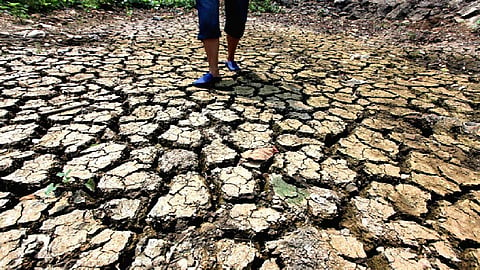

# Ajayan | With the monsoon still faltering well past the midpoint of the season, fears of drought are spreading across the country. Kerala, where the monsoon first makes landfall, has recorded a 34 per cent rainfall deficit. Football fans may have waved the red card at power cuts during the just-concluded World Cup, and authorities blame depleted hydel reservoirs. But those outages are only a symptom of a deeper malaise. The first and hardest blow is likely to fall on the agriculture sector.
Across the country, the kharif season, the backbone of India's foodgrain production, is poised for a severe setback. Falling output will be compounded by a sharp decline in soil moisture, jeopardising not only the current harvest but also the prospects for the ensuing crop season.
Meteorologists attribute the rainfall deficit to El Nino, the warming of surface waters in the central and eastern Pacific that creates a vast low-pressure zone, alters wind patterns and disrupts the flow of moisture-laden monsoon winds. A particularly strong, possibly "super"El Nino as suspected by experts, could cast its shadow over weather patterns for nearly two years.
Agriculture experts, however, dismiss the spectre of famine that accompanied past super El Nino episodes. Robust buffer stocks provide a strong safety net. Though the area under cultivation has shrunk over the years, advances in farming practices and irrigation have significantly raised productivity, pushing foodgrain output well ahead of the country's population growth.
In Palakkad, Kerala's rice bowl, the picture is bleak. Padasekhara committees report that even replanted fields have withered for want of rain. A second attempt to prepare the land and sow paddy has met the same fate. Many farmers have abandoned cultivation this season, staring at mounting losses and deepening debt.
The worst-hit, however, are the hilly agro-ecological zones of Idukki and Wayanad, which have recorded rainfall deficits of 58 and 61 per cent, respectively. The shortfall threatens Kerala's cash crops. In Idukki, India's principal small cardamom-growing region, farmers fear a sharp decline in both yield and quality despite last season's robust harvest of 24,715 tonnes, up 16 per cent from the previous year. Poor capsule setting, caused by inadequate rainfall, is expected to depress production, while tea plantations, too, are likely to bear the brunt of the dry spell. Replanted tea estates will need irrigation which is tough in the present condition.

In Wayanad, the state's coffee and pepper heartland, the immediate impact is less severe as coffee has already completed its flowering and berry-setting stages. The prolonged dry spell, however, is expected to weigh on the next crop cycle. Pepper, on the other hand, is less vulnerable at this stage, as excessive and continuous rainfall can be equally damaging. The widespread practice of intercropping pepper with coffee is therefore likely to cushion farmers against significant losses.
The deficient monsoon also heightens the risk of pest attacks and crop wilt. Climatologist Gopakumar Cholayil, who has closely tracked Kerala's agricultural trends over the years, told Metro Vaartha that the rainfall deficit could prove devastating, particularly in an era of climate change, when shifting weather patterns are spawning new pests and diseases. Kerala already depends on other States for nearly 80% of its foodgrains because of the steady decline in paddy cultivation. A widespread monsoon failure across the country would therefore deepen the State's vulnerability. Much now hinges on whether the monsoon stages a meaningful revival in the weeks ahead.
