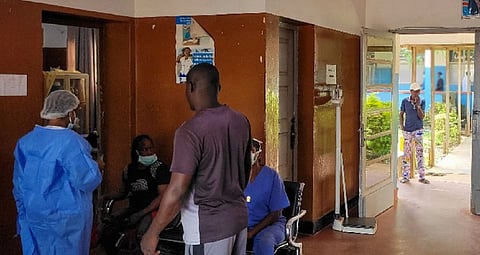

Abuja (Nigeria) | WHO Director-General Tedros Adhanom Ghebreyesus declared the Ebola disease outbreak in Congo and Uganda a public health emergency of international concern on Sunday after more than 300 suspected cases and 88 deaths.
In a post on X, the World Health Organisation said the outbreak does not meet the criteria of a pandemic emergency like the COVID-19 pandemic, and advised against the closure of international borders.
Ebola is highly contagious and can be contracted via bodily fluids such as vomit, blood or semen. The disease it causes is rare, but severe and often fatal.
Health authorities have confirmed the current outbreak is caused by the Bundibugyo virus, a rare variant of the Ebola disease that has no approved therapeutics or vaccines. Although more than 20 Ebola outbreaks have taken place in Congo and Uganda, this is only the third time the Bundibugyo virus has been reported.
Congo accounts for all except two of the cases, both of which were reported in neighbouring Uganda, the WHO said.
Officials first reported the spread of the disease in Congo's eastern province of Ituri, close to Uganda and South Sudan, on Friday. On Saturday, the Africa Centres for Disease Control and Prevention reported 336 suspected cases and 87 deaths.
“There are significant uncertainties regarding the true number of infected persons and geographic spread associated with this event at the present time. In addition, there is limited understanding of the epidemiological links with known or suspected cases,” Tedros said.
Uganda on Saturday confirmed one case it said was imported from Congo, and said the patient died at a hospital in Uganda's capital, Kampala, and the WHO said that a second case has been reported in Kampala. The two cases had no apparent links to each other, and both patients had travelled from Congo, it added.
The Bundibugyo virus was first detected in Uganda's Bundibugyo district during a 2007-2008 outbreak that infected 149 people and killed 37 people. The second time was in 2012 in an outbreak in Isiro, Congo, where 57 cases and 29 deaths were reported.
WHO's emergency declaration is meant to spur donor agencies and countries into action. However, the global response to previous declarations has been mixed.
In 2024, when the WHO declared mpox outbreaks in Congo and elsewhere in Africa a global emergency, experts at the time said it did little to get supplies like diagnostic tests, medicines and vaccines to affected countries quickly.

