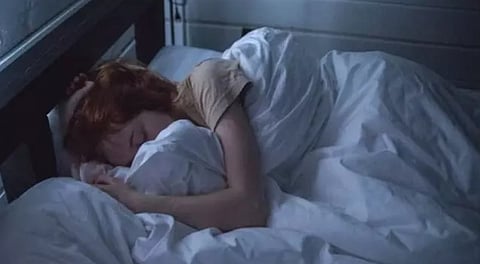

New Delhi | In this fast-paced world where the constant hustle and worries about the future can lead to sleepless nights, many people turn to over-the-counter (OTC) sedatives to help them sleep.
While sedatives may seem an easy solution, experts, citing serious long-term risks, warn against the use of the medicines without proper consultations from health professionals.
Dr. Mir Faisal, a pulmonologist specialising in sleep medicine, expressed his concern over the widespread misuse of OTC sedatives.
“Many people use these medications without consulting a healthcare professional. While they may provide temporary relief, sedatives come with a host of adverse effects,” said Dr Faisal in an interview to PTI Videos on World Sleep Day.
He stressed that these drugs can harm various systems in the body, from the brain to the heart and kidneys.
World Sleep Day is observed every year on the Friday before the Spring Equinox. It serves as a reminder of the importance of healthy sleep.
Established by the World Sleep Society in 2008, the day aims to raise awareness about sleep health, educate the public about sleep disorders, and encourage better sleep habits. The theme for this World Sleep Day this year is “Make Sleep Health a Priority”.
The side effects of OTCs, Faisal warned, often begin as mild but can become severe over time. “When we go on taking them, then there's another issue. When we take it for a long time, they don't then affect it much [sic]. So a person goes on taking higher and higher doses. And with higher doses, we have more side effects. And these side effects then become irreversible if the patient is taking it for a long time.,” he added.
The expert says that poor sleep is not just a small inconvenience but can lead to serious health issues such as heart disease, diabetes and mental health challenges. The significance of “World Sleep Day” lies in its message: “Sleep is essential for health.” It encourages people to prioritise sleep, develop healthy bedtime routines and seek professional help when dealing with sleep disorders.
Despite the temptation of quick fixes like OTC sedatives, experts stress that the real solution to sleep problems lies in understanding the underlying issues. “Sedatives may, for the time being, solve the problem, but it comes with long-term risks and doesn't address the root causes of sleep disorders,” Dr Faisal highlighted.
“Proper treatment of sleep disorders requires professional evaluation and a tailored approach to managing sleep health.”
In addition to the risks posed by OTC sedatives, there is growing awareness about conditions like sleep apnea, insomnia and parasomnias - sleep disorders that can significantly affect quality of life.
In a rapidly changing world, World Sleep Day serves as a vital reminder to take sleep health seriously and to seek the proper guidance from healthcare professionals.
Washington | Chances are, if you're reading this, you got some sleep last night. But are you feeling rested?
Experts say it's an important question to consider.
Most of us spend a third of our lives sleeping, but you may need more or less than eight hours a night. Here's what sleep scientists and doctors say about how much you really need — and whether your gender plays a role.
Sleep quality over quantity
Sleep is still a mystery, despite how critical it is for our health.
“The reasons aren't entirely clear, but it's an essential thing that we all do,” said Dr. Rafael Pelayo, a sleep specialist at Stanford University.
“Something remarkable happens when you sleep. It's the most natural form of self-care that we have.”
Most of the population gets between seven to nine hours — and that particular category has the lowest association with health problems, said Molly Atwood, a behavioral sleep medicine clinician at Johns Hopkins.
Once people either dip into less than six hours of sleep or get more than nine hours on average, the risk of health problems inches up, Atwood said, but everybody is different.
When you're trying to figure out how much sleep you need, it's important to think about the quality of it, Pelayo said: “What you really want to do is wake up feeling refreshed — that's what it's about.”
“If somebody tells me that they sleep many hours but they wake up tired, something is wrong," Pelayo said. "You shouldn't leave your favourite restaurant feeling hungry.”
How much sleep we need changes
The amount of sleep we need changes throughout our lives. Newborns need the most — somewhere between 14 to 17 hours.
“Definitely when we're babies and children, because we are growing so rapidly, we do need a lot more sleep,” Atwood said.
The National Sleep Foundation recommends most adults between 26 and 64 get between seven to nine hours of sleep. People who are 65 and older can get slightly less, and young adults between ages 16 and 25 can get slightly more.
Humans cycle through sleep stages roughly every 90 minutes. In the first portion of the night, Atwood said that more of the cycle is slow wave sleep, or deep sleep, which is essential to repairing and restoring the body. It's also when “growth hormone” is released.
In the latter hours of the night, more of the sleep cycle is spent in rapid-eye movement sleep, or dream sleep, which is important for learning and memory consolidation, or the process in which short-term memory gets turned into long-term memory.
Kids get more “deep sleep,” with about 50 per cent of the night in that realm, she said. That drops at adolescence, Atwood said, because our body doesn't need the same kind of repair and restoration.
Something else interesting happens around puberty: Gender-based differences in sleep start to crop up.
Do women need more sleep than men?
Research doesn't show that women need more sleep — but women do get slightly more sleep on average than men, Atwood said.
It starts at a young age. Though they have the same sleep needs, teenage girls seem to get less sleep than teenage boys, Pelayo said. Additionally, teenage girls tend to complain of insomnia more frequently.
When women become first-time mothers, they often care for newborns throughout the night more frequently, which means less sleep, said Allison Harvey, a clinical psychologist and professor who studies sleep at UC Berkeley.
Hormones may also impact women's sleep quantity and quality during pregnancy and menopause.
“With menopause in particular, women can develop deterioration in their sleep with an increased number and duration of nighttime awakenings,” said Dr. Mithri Junna, a Mayo Clinic neurologist who specializes in sleep.
Atwood said women may also need more sleep right before their menstrual cycle.
“There are definitely times that your body's telling you that you need more sleep,” she said. “It's important to listen.”
When to seek help sleeping
You'll know if you're not getting enough sleep if you're feeling grumpy, irritable and inattentive. Long-term, those minor symptoms can become serious problems — even deadly.
“If you're not getting enough sleep or you have untreated insomnia or sleep apnea, your risk of depression increases,” Atwood said.
“Your risk of cardiovascular issues like high blood pressure, risk of heart attack and stroke increases. Your immune system is compromised. You're at greater risk for Alzheimer's.”
If you're getting the recommended amount of sleep every night but still waking up feeling tired, you might consider going to your primary care physician.
They can rule out other health conditions that may affect your sleep, Atwood said. But if problems persist, seeking out a sleep specialist could be helpful.

